Our Work › Youth Development › Second Order Change
Young people thrive when the adults around them are grounded, self-aware, and skilled at connection. Second Order Change builds those skills in youth-serving professionals. When staff grow, so does the quality of every program, relationship, and space young people walk into.
For adults who work with young people
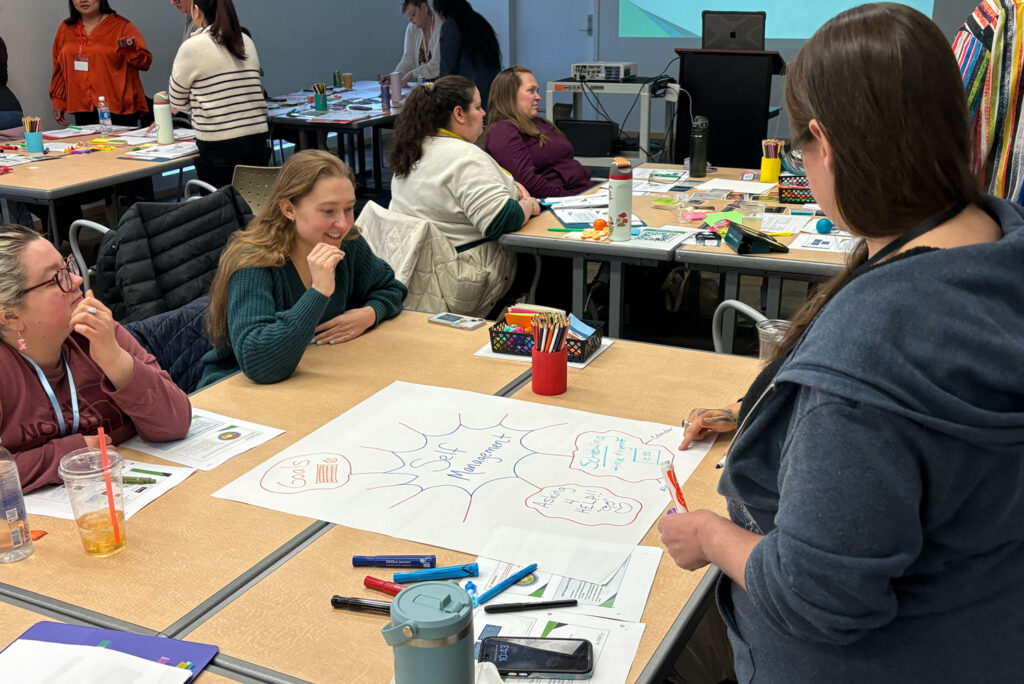
Second Order Change is a six-session series for adults who work with young people. Small cohorts meet in person in Anchorage for 3.5 hours a week over six weeks, late February through early April. Sessions cover self-awareness, social awareness and cultural responsiveness, relationship and coaching skills, self-management and wellness, and responsible decision-making. Participants practice between sessions and bring new skills back to their own programs.
Anyone who works directly with young people. Frontline staff, coordinators, supervisors, and volunteers. Individuals can come on their own, or teams can attend together, and that mix is part of what makes a cohort work.
Six sessions, 3.5 hours each, once a week from late February to early April 2027. Participants also have optional exercises they practice between sessions.
Registration is $200, with discounts for AYDC members and groups. No one is turned away for cost. Email aydc@safealaskans.org about financial assistance.
2027 cohort
First order change adjusts what a person does. Second order change changes the lens; how a person sees their work and relationships, and how they show up in both. A new behavior chart is first order. Rethinking what a young person’s behavior is telling you, and letting that change how you work with them is second order. This series is built for the second kind, because that is the change that lasts.
Social-emotional learning, or SEL, is the set of skills people use to understand themselves, relate to others, and make sound decisions. Most SEL programs teach these skills to young people. Second Order Change teaches them to adults. When we practice self-regulation and relationship repair ourselves, we can model both for the young people we work with.
The series follows the five widely used SEL competency areas, designed by the Collaborative for Academic, Social, and Emotional Learning (CASEL):
1
Shared language and why adult SEL matters.
2
Recognizing your own strengths, limits, and triggers.
3
Seeing young people in their full context.
4
Listening, feedback, and repair.
5
Managing stress and supporting staff who carry hard stories.
6
Making steady choices under pressure.
Each session runs 3.5 hours, once a week, in person in Anchorage. The 2027 sessions will be taught at Cook Inlet Tribal Council. Sessions include discussions, small-group work, and active participation. Facilitators work in teams, so participants encounter different perspectives and voices. Between sessions, each participant takes one action step back into their own program and then shares their experience with their small group. That practice loop is where change begins to happen.
Step 1 · In session
Discussions, small-group work, and active participation
Step 2 · Between sessions
One action step back into your own program
Step 3 · Next session
Share your experience with your small group
Alumni describe concrete shifts: asking more reflective questions instead of jumping to solutions, using new coaching methods with the staff they supervise, naming their own stress responses before those responses reach a young person, and adjusting program norms so youth have more say. Participants also leave with a cross-organization network, which alumni consistently name as one of the strongest parts of the experience. Cultural responsiveness runs through the series, essential in a city as diverse as Anchorage.
Come ready to talk about your own experiences. Sessions ask participants to reflect out loud, listen closely, and try things that may feel unfamiliar. Clearing the calendar for all six sessions matters. Participants who attend the full series report the biggest gains, and the cohort depends on people being in the room. Supervisors are encouraged to protect that time.
Staff who are new to youth work, staff carrying heavy caseloads, and supervisors rebuilding a team culture all get strong value from the series. No prior training is required. The 2026 cohort drew staff from Anchorage Youth Court, Camp Fire Alaska, Cook Inlet Tribal Council, Denali Family Services, and Safe Alaskans.
$200
Registration is $200 for the full six-session series. AYDC sponsors receive a discount, and group rates are available for organizations sending more than one person. Cost is never a barrier: financial assistance is available to anyone who needs it, and no one is turned away for inability to pay. Email aydc@safealaskans.org to ask about a discount or assistance.
Goldstream Group, an independent Alaska evaluator, reviews Second Order Change every year. In the 2026 cohort, all ten participants reported growth in at least one social-emotional skill.
19%
Average scores rose from 3.8 to 4.5 — a 19% increase — with gains across all 21 skills measured.
29%
Self-awareness grew the most, up 29%.
4 → 9
Before the series, four of ten participants could name a stress management strategy; afterward nine could, and eight were already using them.
9 of 10
Nine of ten would recommend the series to a colleague.
“[Quote from a 2026 cohort participant about what changed in how they work with young people. Request from AYDC.]”
— [Name, role, organization]
For supervisors and organization leaders
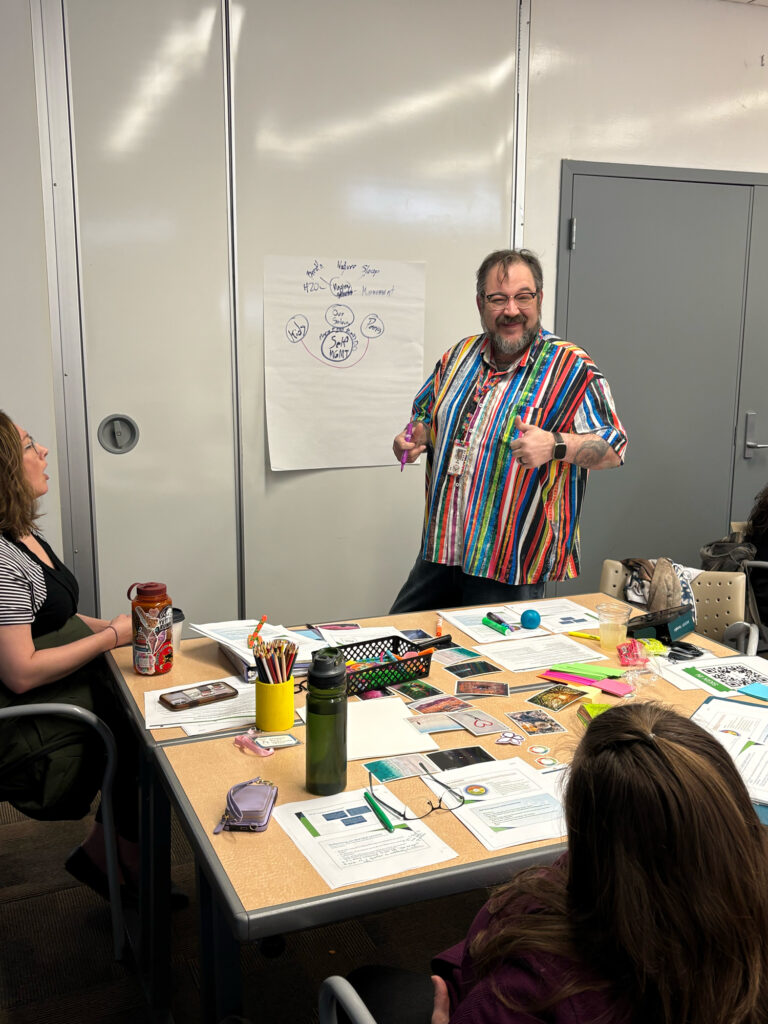
Staff who attend on their own get the full benefit of the series, plus a cohort of peers from across Anchorage. Sending two or more adds colleagues at your own organization who can support each other’s practice afterward. Group rates are available. Contact AYDC at aydc@safealaskans.org about sending a team, or about the Training of Facilitators, which certifies alumni to help lead future cohorts.
For graduates
Graduates of the series are eligible to apply for our Training of Facilitators Certification. This biennial training includes a short online orientation, four three-hour modules, and a practicum inside a live cohort. Candidates are certified on demonstrated skills through a rated teach-back and mentor-observed co-facilitation. Certified facilitators go on to help lead future cohorts.
Alumni of the Second Order Change series. Completing all six sessions as a participant comes before training to facilitate them.
A rated teach-back and a mentor-observed co-facilitation in a live cohort. Showing up to every module does not by itself certify a facilitator.
Youth Matter Grants
Up to $5,000 for youth-led projects by Anchorage youth ages 12–24.
Anchorage Youth Development Coalition
Learn other ways Safe Alaskans supports youth serving organizations.
AYDC Professional Development & Training
Workshops and skills-based trainings for youth-serving professionals, in person and online.
Second Order Change is made possible by the Alaska Division of Behavioral Health and by Cook Inlet Tribal Council, a founding partner and funder of the series. Annual evaluation is conducted by Goldstream Group. The series is a program of the Anchorage Youth Development Coalition, housed at the Center for Safe Alaskans, and is delivered by AYDC staff and certified Second Order Change facilitators.